
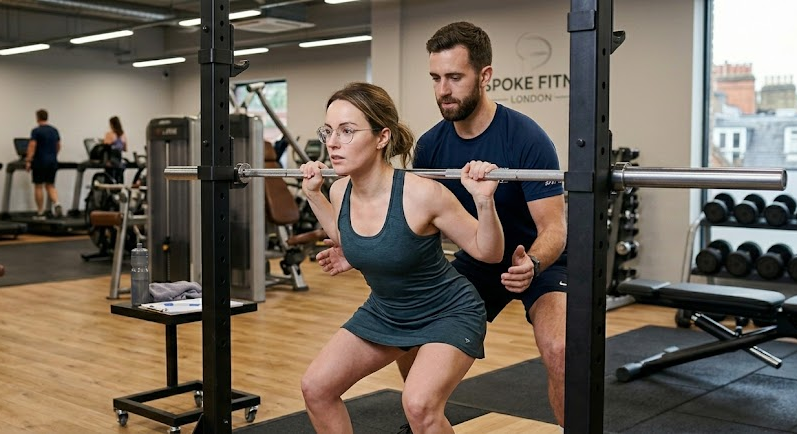
Finding a fitness coach can be tiring. You might waste hours looking through social media profiles or reading posters at the gym. Your health is an important investment of your time and money.
As of April 2026, 12.2 million UK people had health and fitness club memberships. This high demand makes it vital to find a qualified professional who understands your needs.
Choosing the wrong coach can lead to frustration and wasted effort. You need someone who knows your unique physical requirements and your specific goals. The right coach can turn a difficult process into a clear path toward success.
At Sam Gray, we help you achieve lasting results through personalised training, clear nutrition guidance, and a supportive, non-intimidating environment.
A structured process helps you find a coach who fits your lifestyle and goals.
Practical Tips to Choosing the Right Personal Trainer
Here are some practical tips you can take to choose the right personal trainer:
Tip 1: Match Expertise to Your Vision
Every fitness professional has a unique background. Some focus on heavy lifting, while others specialise in fat loss or injury recovery. Before you start your search, decide what you want to achieve.
A recent Train Fitness report found that 79% of gym members in the UK joined to boost their mental health and wellbeing. This change highlights the importance of finding out a coach whose skills align with your personal goals, rather than focusing only on physical appearance.
A bodybuilder may not be the best option if your goal is to improve your mobility for daily activities. Ask about their previous clients. Coaches who work with athletes will utilise different methods than those who work with beginners.
Look for someone who understands your needs and the specific challenges you face.
Tip 2: Check Professional Qualifications and Insurance
The fitness industry does not have strict rules. Anyone can become a coach after just a weekend course. Always ask to see these certifications.
A good trainer should have at least a Level 3 Personal Training qualification. Make sure they’ve public liability insurance. This protects both you and the trainer during sessions. Qualified trainers stay updated with the latest safety standards. They know how to help you improve without causing injury.
Your safety is the most important part of any good fitness program.
Tip 3: Assess the Initial Consultation Process
A good trainer listens to more than they talk. In your first meeting, they should assess your current health. They should ask about your medical history and sleep patterns. Pay attention to whether they take notes while you speak; this shows they value you as an individual. They should also perform movement screens to check how your joints work.
If a coach starts a workout without checking your form first, that’s a warning sign. Use this meeting to see if their personality matches yours.
Bring a list of questions to your first meeting. This will help you remain focused and act professionally.
- What experience do you have that relates to my goal?
- How do you track my progress and report back to me?
- What happens if I miss or cancel a session?
- Do you offer support outside of gym hours?
Tip 4: Evaluate the Coaching Environment
Think about where you feel comfortable. Some people enjoy the smell of rubber mats and the sound of weights in a big gym. Others find these places loud and overwhelming. Private studios provide a quiet space where you can focus without feeling watched.
Bournemouth has many options, from boutique gyms to outdoor parks. Pick a setting that makes you feel confident. If the environment makes you anxious, you might find reasons to skip your workouts.
Tip 5: Check for Nutritional and Lifestyle Support
Training is just one part of your fitness journey. What you do during the other 23 hours of the day is even more important. A good personal trainer should help you with food choices and habits as part of your routine. They should give you clear advice on how much protein to eat and how to stay hydrated.
Avoid trainers who push expensive supplements or strict diets. Instead, find someone who helps you to have a healthier relationship with food. They must also give advice on managing stress and improving your sleep. Their lifestyle factors are key to how quickly your body changes.
Tip 6: Compare Training Formats and Styles
People do best in different settings. You may like the focus of a one-on-one session or the excitement of being in a group.
| Feature | One on One Training | Group Fitness Classes |
| Personalisation | High customisation for your body | Generalised for the whole group |
| Cost | Higher price per hour | More budget friendly |
| Focus | Full attention on your form | Shared attention among peers |
| Social | Quiet and private | High energy and social |
Tip 7: Trust Your Gut Feeling
Chemistry is important for a long-term partnership. You will spend several hours a week with your coach. After each session, you must feel encouraged and supported. A coach should be firm but kind. If they make you feel small or guilty, they are not the right fit.
Look for a trainer who celebrates your small wins. They should support you when your motivation is low. Personal training works best when there is mutual respect and clear communication.
Conclusion
Choosing a personal trainer requires careful thought. First, check their qualifications and experience. Pay attention to how they make you feel. Look at their approach to nutrition and lifestyle to ensure it aligns with your requirements. A good trainer will treat you as a person, not just a number.
Contact us at Sam Gray in Bournemouth today to book your consultation and start your custom fitness journey.

