
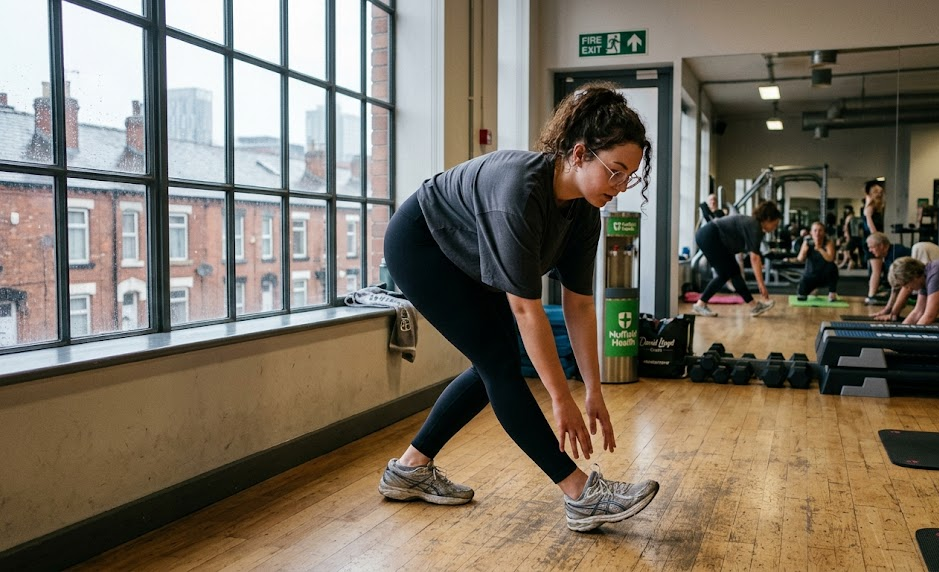
You finish your last set, grab your bag, and head to the door. Does this sound familiar?
Many people follow this routine. The workout is done, the hard part is over, and the cool down feels pointless. But skipping those five to ten minutes at the end of your session can lead to long-term physical issues.
According to the UK Government, almost one in five adults aged 16 and over in the UK live with a long-term musculoskeletal condition. Muscle stiffness and reduced mobility are among the most common symptoms, and regular stretching is one of the simplest ways to manage them.
Not recovering after workouts can lead to tight muscles, stiffness, and pain, making it harder to progress. Focusing on flexibility is crucial for better movement, fewer injuries, and staying active as you age.
At Sam Gray, we help you achieve lasting results through personalised training, clear nutrition guidance, and a supportive, non-intimidating environment.
Dynamic Stretching vs Static Stretching: The Difference
Before starting the stretches, it’s helpful to understand the two main types of stretching:
| Dynamic Stretching | Static Stretching | |
| When | Before a workout | After a workout |
| How it works | Controlled movement through a range of motion | Holding a position for a set period to lengthen the muscle |
| Purpose | Increases blood flow and prepares the joints for exercise | Lengthens worked muscles and supports recovery |
| Hold time | No hold; continuous fluid movement | 20 to 45 seconds per position |
| Examples | Leg swings, hip circles, arm rolls | Hip flexor stretch, hamstring stretch, child’s pose |
| Feel | Active and energising | Calm and restorative |
Use a foam roller or a tennis ball before stretching. Roll out your glutes, hamstrings, or upper back for 60 to 90 seconds. This helps release muscle tension and prepares them to stretch more easily. It shouldn’t be painful if done correctly.
The Role of Breathing in Recovery
Before you start stretching, take a moment to breathe deeply.
During a workout, your body can feel tense. Deep breathing helps signal to your body that it’s time to relax. Inhale through your nose for four counts and exhale through your mouth for four counts. Do this a few times before starting.
As you hold each stretch, continue to breathe. Exhale gradually as you move into the stretch to help muscles relax. If you hold your breath, your muscles will tighten. Keep your breathing steady and slow.
With your breathing steady, move into these seven essential stretches:
Post-Workout Stretches to Improve Flexibility
Here are the seven post-workout stretches to improve your flexibility:
Kneeling Hip Flexor Stretch
The hip flexors are often ignored, mainly by people who sit at a desk for long periods. They can get tight and misalign the lower back.
A recent Nuffield Health report found that 4 in 5 adults in the UK will experience back pain at some point in their lives. Inactivity is a major reason why muscles tighten and joints become stiff. A common culprit behind discomfort is tight hip flexors, often caused by hours of sitting. It’s surprising how our daily habits can restrict our bodies.
To stretch your hips, kneel on one knee with the other foot flat on the floor in front of you. Gently shift your weight forward until you feel a stretch in front of the kneeling leg. Keep your chest upright. Hold this position for 30 seconds on each side.
Standing Hamstring Stretch
Tight hamstrings are very common. They can affect your posture, cause discomfort in your lower back, and make it hard to perform exercises like deadlifts correctly.
To stretch your hamstrings, stand tall and place one heel on a raised surface, such as a bench or step. Keep your leg straight and lean forward at your hips, not your waist, until you feel a stretch in the back of your thigh. Hold this position for 30 seconds. Then switch to the other side.
Seated Glute Stretch
The glutes work hard during exercises like squats, lunges, and running. When they get tight, the hips can lose their flexibility, and the lower back often has to take over.
To stretch your glutes, sit on the floor with both legs straight in front of you. Cross one ankle over the opposite knee and lean gently forward from your hips. You should feel a deep stretch in the outer glute of the crossed leg. Hold this position for 30 seconds on each side.
Child’s Pose
This exercise helps reset your whole body. It stretches your spine, hips, lats, and lower back at the same time.
Kneel on the floor and sit back on your heels. Reach both arms forward along the floor, and rest your forehead down. Breathe deeply into your lower back. Stay in this position for 30 to 45 seconds. It should feel like a good release after a tough workout.
Chest Opener Stretch
Sitting at a desk for many hours and doing heavy pressing exercises can tighten your chest and pull your shoulders forward. Over time, this can harm your posture and your shoulders’ health.
To help, improve posture and clasp your hands behind your back. Gently squeeze your shoulder blades together and lift your hands slightly while opening up your chest. You should feel a stretch in the front of your shoulders and chest. Hold this position for 20 to 30 seconds.
Quad Stretch
The quadriceps work hard during lower-body exercises and need proper care afterward.
To stretch them, stand up on a single leg and bring your opposite foot up toward your backside while keeping your knees together. Try to stand up straight and avoid leaning forward. If you have trouble balancing, use a wall for support. Hold this position for 30 seconds on each side.
Spinal Twist
A spinal twist at the end of your session helps relieve back pressure and improve spine rotation.
Lie on your back. Pull one knee toward your chest, then let it drop across your body to the other side. Extend the same arm out flat and look away from the knee. Breathe into the twist. Hold for 30 seconds, then repeat on the other side.
For a clearer understanding of how spinal rotation supports back health and movement, take a look at this spinal twist guide to know more.
Common Stretching Mistakes to Avoid
Avoid these stretching mistakes:
- Don’t bounce into a stretch; hold it steadily instead.
- Stop if you feel sharp or shooting pain; do not push through it.
- Breathe normally; don’t hold your breath while stretching.
- Always warm up your muscles before your stretch.
- Take your time with each position; don’t rush through them.
A Three-Minute Express Routine
If you’re short on time, you can do this quick routine when the full workout isn’t possible.
- Start with 30 seconds in child’s pose.
- Spend 30 seconds on each hip flexor.
- End with 30 seconds on each side of a spinal twist.
This targets the main areas in just three minutes.
Conclusion
After your workout, take time to stretch. Spending just five to ten minutes on 7 simple stretches can improve flexibility, reduce pain, and make movement easier.
Regularly doing cool-down stretches is a great method to support your physical health. Make stretching a habit, not an afterthought; the long-term benefits are worth it.
If you want to support building a training routine that works for your body, contact us at Sam Gray.

